2015 T.A.S. Book Festival – Author Spotlight

Friday October 23rd @ 1:00 PM – 1:50 PM                                DOUGLAS MANGUM & ROGER MOORE

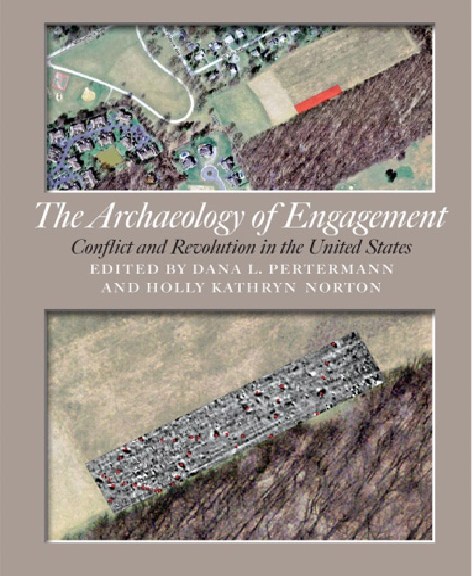
“The Archaeology of Engagement: Conflict and Revolution in the United States”Book1Pic
Edited by Dana L. Pertermann and Holly K. Norton

Presented by Contributing Authors:  Roger G. Moore and Douglas Mangum

When a historic battlefield site is discovered and studied, the focus is often on the “hardware”: remnants of weaponry, ammunition, supplies, and equipment that archaeologists carefully unearth, analyze, conserve, and frequently place on display in museums. But what about the “software”? What can archaeology teach us about the humans involved in the conflict: their social mores and cultural assumptions; their use and understanding of power?

In The Archaeology of Engagement: Conflict and Revolution in the United States, Dana L. Pertermann and Holly Kathryn Norton have assembled a collection of studies that includes sites of conflicts between groups of widely divergent cultures, such as Robert E. Lee’s mid-1850s campaign along the Concho River and the battles of the River Raisin during the War of 1812. Notably, the second half of the book applies the editors’ principles of conflict-event theory to the San Jacinto Battlefield in Texas, forming a case study of one of America’s most storied—and heavily trafficked—battle sites.

Conflicts, battles in particular, are events that were purposeful, meant to change the present in which the participants lived. Culturally contingent, and often having unforeseen consequences, conflict-event theory recognizes that battles provide rapid social change akin to punctuated equilibrium, complementing a more gradual, daily process of cultural change. As many of the contributions illustrate, archaeology provides new insights to the understanding of battles that traditional historiography is often unable to access. While this book focuses on American battlefields, it will also contribute to the ever-expanding research of cross-cultural violence and warfare.

DANA L. PERTERMANN is associate professor of anthropology and geology at Western Wyoming Community College in Rock Springs. HOLLY K. NORTON is a compliance manager for the Colorado Office of Archaeology and Historic Preservation in Denver.

Dr. Roger G. Moore has worked as a professional archeologist since 1976.  He was a pioneer in demonstrating the potential for survival Book1Pic2of significant archeological remains in heavily urbanized American contexts such as the City of Galveston and the Houston Central Business District, as well as in developing the archeological field methods appropriate for dealing with urban contexts. His work and publication in urban archeology began during his graduate studies at Rice University and has continued throughout his subsequent career. Moore initiated an independent archeological consulting practice based in Houston, Texas, in 1982.  His firm has conducted over 500 major archeological projects and many smaller investigations.  These projects were conducted for a very diverse array of endeavors including original historical and archeological research, highway construction, mass transit, park development, energy projects, oil spills, flood control, real estate development, industrial development and conflict archeological research at the San Jacinto Battleground.  Moore is also keenly interested in spatial relationships and developed a quantitatively based predictive model for prehistoric settlement in Southeast Texas that has been acknowledged as accurate by the Archeology Division of the Texas Historical Commission.  While now eclipsed by the Texas Sites Atlas, his firm had its own internal GIS project of prehistoric site locations, survey areas, historical markers, and other relevant geographical loci in this region years before the introduction of the Atlas. Moore’s presentations and peer-reviewed publications in recent years have centered upon his firm’s conflict archeological discoveries at San Jacinto.

Douglas Mangum M.A. is a Principal Investigator and Historian at Moore Archeological Consulting. In those capacities he co-manages the work the firm has conducted at the San Jacinto Battlefield. Before joining the firm he worked for the U. S. Forest Service and in various volunteer and student projects that took him to sites in Scotland, England, Mississippi, and New Mexico as well as Texas. Douglas earned his BA in Archeology at the University of Texas and an MA in History from the University of Houston–Clear Lake. Douglas’ master’s thesis focused on American expansionism in the early nineteenth century, particularly as it applies to Texas. This historical focus and his research into the Battle of San Jacinto, in combination with his archeological work at the battlefield, has resulted in his chapter in the book The Archaeology of Engagement, Conflict and Revolution in the United States

Publisher:  Texas A&M University Press, 10/16/2015, ISBN:  978-1-62349-294-6
Purchase Book  
Contact Editor: Pertermann
Contact Moore Archeological Consultants 

2015 T.A.S. BOOK FESTIVAL

Organized and sponsored by the Journal of Texas Archeology and History.org

Complete Book Festival Information

Greetings! The Journal of Texas Archeology and History.org is pleased to organize and sponsor the 2015 T.A.S. Book Festival as part of the TAS Annual Meeting in Houston.  We have a terrific line-up of authors presenting recent new publications of interest to our membership and the general public.  The event will begin Friday afternoon, October 23 beginning at 1:00 PM when four authors will present their new books.  Friday is topped off by our evening public speaker, Marilyn Johnson, presenting her new book “Lives in Ruins: Archaeologists and the Seductive Lure of Human Rubble” at 4:00 PM. On Saturday we will begin at 9:00 AM and will take a break during the TAS business meeting luncheon.  After lunch Diana Greenlee will present her new book “Poverty Point: Revealing the Forgotten City” about the New World heritage site, Poverty Point.  The book festival will be wrapped up by our banquet speaker, Jean Clottes, presenting his new book on the rock art of India, “Rock Art and Tribal Art in India” (“Des Images pour les Dieux. Art rupestre et Art tribal dans le Centre de l’Inde”) starting at 5:00 PM.  Authors will address the room to discuss their book and the writing process.  Afterward, they will be selling and autographing their books.  The book festival is open to the public and will take place in the hotel atrium near the book room and silent auction.  Following is the schedule of authors presenting their recently published works:


FRIDAY, October 23, 2015
1:00 PM – 1:50 PM     DOUGLAS MANGUM & ROGER MOORE
“The Archaeology of Engagement: Conflict and Revolution in the United States” 
Edited by Dana L. Pertermann and Holly K. Norton Presented by Contributing Authors:  Roger G. Moore and Douglas Mangum

2:00 PM – 2:50 PM     WILSON “DUB” CROOK

“The Late Prehistoric of the East Fork:  A Redefinition of Cultural Concepts Along the East Fork of the Trinity River, North Central Texas” 
Wilson W. “Dub” Crook, III and Mark D. Hughston

3:00 PM – 3:50 PM     NANCY KENMOTSU & DOUG BOYD

The Toyah Phase of Central Texas: Late Prehistoric Economic and Social Processes” 
Editors: Nancy A. Kenmotsu and Douglas K. Boyd Contributing authors: John W. Arnn, III, Douglas K. Boyd, Zackary I. Gilmore, Leonard Kemp, Nancy A. Kenmotsu, Karl W. Kibler, Raymond Mauldin, Khori Newlander, Elton R. Prewitt, John D. Speth, and Jennifer Thompson.

4:00 PM – 4:50 PM     MARILYN JOHNSON

“Lives in Ruins: Archaeologists and the Seductive Lure of Human Rubble” 
Marilyn Johnson

SATURDAY, October 24, 2015

 9:00 AM – 9:50 AM     ANDY HALL

“Civil War Blockade Running on the Texas Coast” 
Andrew W. Hall

10:00 AM – 10:50 AM     MIKE WATERS

“The Hogeye Clovis Cache” 
Michael Waters and Thomas Jennings

11:00 PM – 11:50 PM     HARRY SHAFER

“Painters in Prehistory:  Archaeology and Art of the Lower Pecos Canyonlands.”  
Harry J. Shafer, PhD.

12:00 PM – 2:00 PM     BREAK FOR T.A.S. BUSINESS LUNCHEON

2:00 PM – 2:50 PM     DIANA GREENLEE

“Poverty Point: Revealing the Forgotten City” 
Jenny Ellerbe and Diana M. Greenlee

3:00 PM – 3:50 PM     WES & JACE TUNNELL

Pioneering Archaeology in the Texas Coastal Bend: The Pape-Tunnell Collection” 
John W. Tunnell Jr. and Jace W. Tunnell with a foreword by Thomas R. Hester and contributions from Harold F. Pape, John W. Tunnell Sr., and Thomas R. Hester

4:00 PM – 4:50 PM                             MYRIAM ARCANGELI

“Sherds of History: Domestic Life in Colonial Guadeloupe” 
Myriam Arcangeli

5:00 PM – 5:50 PM                             JEAN CLOTTES

“Rock Art and Tribal Art in India”  (“Des Images pour les Dieux. Art rupestre et Art tribal dans le Centre de l’Inde”) 
Jean Clottes, Foix, France

FIRST IMPRESSIONS: ANGLO TRAVELERS AND THE ORIGINS OF EL PASO, TEXAS, 1846-1852

Volume 2, Article 4

FIRST IMPRESSIONS: ANGLO TRAVELERS AND THE ORIGINS OF EL PASO, TEXAS, 1846-1852

By: Mark Cioc-Ortega

ABSTRACT

El Paso del Norte was a thriving agricultural region on the Santa Fe-Chihuahua trail when the U.S.-Mexico War (1846-1848) and the 1849 gold rush turned it into a border town on the southern route to California. The diaries and letters of the Anglo-American soldiers, engineers, and gold seekers who passed through the area in the 1840s and 1850s document the emergence of a new political and economic landscape that helped define the pattern of Anglo-Mexican relations in the new town of El Paso, Texas (across the Rio Grande from El Paso del Norte), well into the next century.

Link to complete article.

A BLACK DEER AT BLACK CAVE: NEW PICTOGRAPH RADIOCARBON DATE FOR THE LOWER PECOS, TEXAS

Volume 2, Article 3

A BLACK DEER AT BLACK CAVE: NEW PICTOGRAPH RADIOCARBON DATE FOR THE LOWER PECOS, TEXAS

By: Lennon N. Bates, Amanda M. Castañeda, Carolyn E. Boyd, and Karen L. Steelman

ABSTRACT

A Pecos River style painting of a black deer from Black Cave Annex (41VV76a) in southwest Texas was radiocarbon dated. Using plasma oxidation and accelerator mass spectrometry, we obtained an age of 1465 ± 40 RCYBP (2 sigma calibrated age range of A.D. 470-660). This age is younger than the accepted age range for Pecos River style paintings, which is approximately 4000-3000 years B.P. This new measurement in association with other younger dates prompts us to question whether the Pecos River style endured for a longer time period than previously thought. More radiocarbon research is needed in order to understand how this anomalous result might fit within the Lower Pecos Canyonlands rock art chronology.

Link to complete article.

CERAMIC TYPES FROM LATE PREHISTORIC SITES ALONG THE EAST FORK OF THE TRINITY RIVER

Volume 2, Article 2

CERAMIC TYPES FROM LATE PREHISTORIC SITES ALONG THE EAST FORK OF THE TRINITY RIVER

By: Wilson W. Crook, III and Mark D. Hughston

ABSTRACT

Ceramics are one of the key diagnostic artifacts that define the Late Prehistoric culture of the peoples that lived along the East Fork of the Trinity and its tributaries. We are completing a 42-year re-evaluation of the Late Prehistoric period of the area and have studied nearly 32,000 artifacts, of which over 10,200 are ceramic sherds. From this study, 20 distinct ceramic types have been recognized. Plain ware, both shell-tempered and sandy paste/grog-tempered, are the predominant ceramic types present, comprising over 90 percent of the total ceramic assemblage. While there is little direct evidence for indigenous manufacture, the abundance of these types suggests they were produced locally. Lesser quantities of decorated ware of distinct Caddo ceramic types from the Red River and East Texas suggest they are likely the product of exchange. There is also a small amount of Puebloan material indicative of a longer distance exchange.

Link to complete article.

Special Announcement

The JTAH is pleased to announce a publishing relationship with Texas Department of Transportation (TxDOT).  You will find evidence of this on the website under the Publications/Special Publications Tab with new menu item for “TxDOT Special Publication 1 (2015).

The first article in this Special Publication volume is the new Peering through the Sands of Time article. It is available in both versions: iBooks for Mac computers and a standard PC version.  It is a simple click of a button download that will not require you to have an account in order for access.  Please note that several 3-D interactive images and hypertext links to additional information are included in the iBook version. Unfortunately, the PC version does not include these advanced features.

An additional note regarding JTAH “Special Publications”: articles published from governmental agencies and significant research organizations are considered “internally reviewed” prior to release for publication on the website.  Articles published integral to the JTAH annual volumes will continue to be peer reviewed. Publication of research works, such as Peering through the Sands of Time are provided to the public as a service to the archeology and history community.

TxDOT Special Publication 1 (2015): Peering Through the Sands of Time

TxDOT Special Publication 1 (2015) – Article 1

Peering Through the Sands of Time: The Archeology of the Caddo at the Kitchen Branch Site (41CP220) in East Texas

By: Mason D. Miller, M.A., Timothy K., Perttula, Ph.D., and Rachel J. Feit, M.A. with Contributions from Robert Z. Selden, Jr., Ph.D. and Chase Earles

Introduction

Beginning in 2004, archeologists working on behalf of the Texas Department of Transportation conducted several phases of investigations at the Kitchen Branch site (41CP220) in northeast Texas’ Camp County. The Kitchen Branch site, situated on the northern bank of the Kitchen Branch of Prairie Creek (the site’s namesake), was located within the footprint of a proposed bridge slated for construction during expansion of FM 557 and would (within the expansion area) be destroyed as a result. For compliance with Section 106 of the National Historic Preservation Act of 1966 (as amended) and the Antiquities Code of Texas (see sidebar on Page 7), those impacted areas were investigated and excavated in detail prior to bridge construction. While the site contained evidence of occupations that ranged from among the earliest humans in the New World through the 20th century, researchers focused on the remnants of a single-family home site attributed to the later phases of Caddo native history, the peoples who dominated the region of northeast Texas, eastern Oklahoma, northwest Louisiana, and western Arkansas from A.D. 800 through the age of European contact.

Initial excavations were conducted by Coastal Environments and Archeological and Environmental Consultants, LLC in 2004 under the direction of David B. Kelley (Coastal) and Timothy K. Perttula (AEC). Subsequent, larger-scale data recovery excavations were completed by Hicks & Company Environmental, Archeological and Planning Consultants (Hicks & Co) and AEC under the direction of James W. Karbula (Hicks & Co) and Timothy K. Perttula (AEC). Finally, analysis and final report preparation was completed by AmaTerra Environmental Inc. (AmaTerra) and AEC with Mason Miller serving as the Co-Principal Investigator with Timothy K. Perttula. Through the course of investigations and analysis, archeologists documented some 236 prehistoric features and collected roughly 20,000 artifacts, shedding light on a lesser-known period of Caddo culture in this particular area.

The results of this extensive investigation and analysis have been exhaustively discussed in the excavation’s final report entitled Archeological Investigations at the Kitchen Branch (41CP220), B.J. Horton (41CP20), and Keering (41CP21) Sites, which is publicly available through your local library. The reader is encouraged to read a copy of this work to dig deeply into the analysis and detail of the investigations and interpretations from the site. It is important that the archeological excavations, artifact analysis, and the preparation of a final report of the findings from the work at the Kitchen Branch site, provide a public benefit. We recognize that with respect to the cultural resource management investigations that were completed at the Kitchen Branch site, in accordance with both federal and state historic preservation laws (see sidebar), a public outreach component is warranted to, according to Lipe and Sebastian “ensure that the nation [or the state] could benefit, over the long-term future, from the active preservation and management of the country’s heritage of archeological and historical properties.” This electronic document represents just that: an opportunity to learn about this site in an approachable, interesting manner. In the next chapter, this electronic report will cover the basics of Caddo native history and culture, while focusing on the Titus phase in this region. From there, discussion will turn to the site excavations themselves, providing the reader with general summaries of the work conducted, the artifacts and features observed and analyzed, and general site interpretations.

Next, this report will focus on Caddo ceramic traditions, from manufacture to form and style before finally turning to the modern recreation of Titus phase ceramics found at the site by a Caddo potter from Oklahoma. From interactive images (be sure to tap away as you read and explore), photo galleries, and three-dimensional models you can explore, the authors hope that this opens up new avenues of learning about this site, the archeologist’s science, and the human history and culture preserved in the sands on this northeast Texas knoll.

Apple Computer Version: Link to full Mac .pdf version. (fully interactive)

PC Computer Version: Link to full PC .pdf version.

Apple iBooks eReader version. (fully interactive)

Android tablet/phone eReaders with Google Play accounts.

Publisher’s note: Please note this article is copyright by TxDOT.

CREVICE INTERMENTS DECONSTRUCTED

Volume 2 (2015) – Article 1

CREVICE INTERMENTS DECONSTRUCTED

By: Stephen L. Black, M. Katherine Spradley, and Michelle D. Hamilton

ABSTRACT
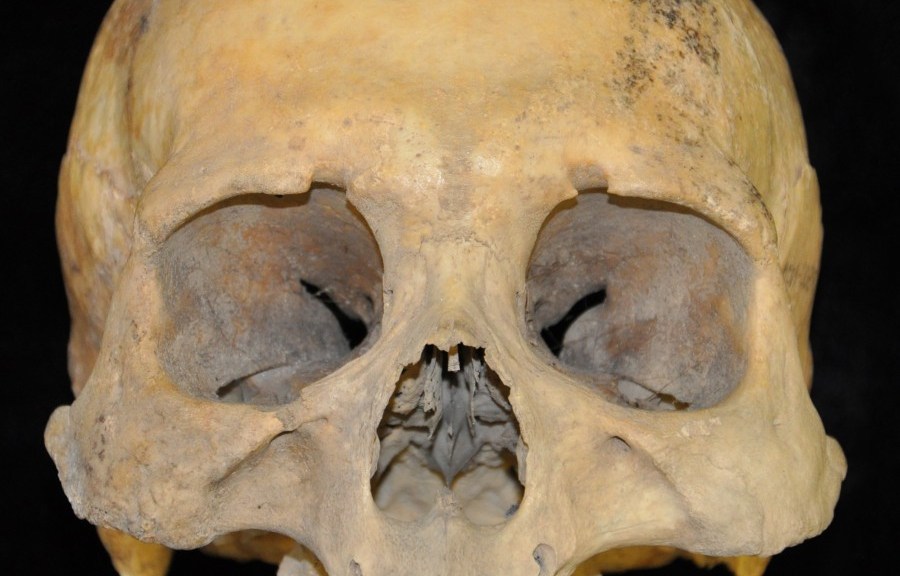
The discovery of two well-preserved human crania in a crevice overlooking a spring-fed creek near Austin, Texas, led to medico-legal, archeological, and bioanthropological investigations aimed at understanding the context and biological affinity of the crania. Archeological excavations uncovered no evidence that the crania were interred in the crevice during prehistoric times. Skeletal analysis showed they were of Native American ancestry. Radiocarbon dating indicated they are contemporary to one another and probably date to the seventh or eighth century A.D. Measured stable isotopic rations of carbon (13C/12C) and nitrogen (15N/14N) derived from human bone collagen samples from the crania are not consistent with other burial populations from the region, having higher nitrogen values than all other comparative samples. The crania also showed polish from repeated handling and several of the molars in one cranium had been glued in place. Taken together, these lines of evidence suggest the crania were removed from an unknown locality outside the Central Texas region, kept in a private collection, and placed in the crevice recently.

Complete Vol 1 (2014)

Complete Volume 1 – 2014 .pdf

Front Matter for Volume 1 – 2014 (Publishers Note: the “Front Matters” contain the front cover, inside cover, table of contents, forward from publisher and list of authors.)


FOREWORD TO VOLUME 1 (2014): PUBLISHER’S REFLECTIONS

Every journey begins with a first step. The seed thought for this Journal germinated during lunch at the Bob Bullock State History Museum barely a year ago. From that late November discussion with Tim Perttula, we have traveled much farther and faster than ever imagined. The rough concept we outlined that day has grown and matured rapidly. Today, we are putting the polishing touches on the premier volume and readying it for publication.

As I pen these thoughts, it is a time to give thanks and reflect on one’s blessings for the year past. The Journal of Texas Archeology and History could not have been possible without the generous participation of many individuals who believe in our mission and purpose. Chief among these is our editor-in-chief, Tim Perttula, who has invested a great deal of his time to ensure the quality and accuracy of the Journal’s content. Supporting Tim is our outstanding editorial board, Steve Black, Chris Lintz, Robert Z. Selden Jr., Frank de la Teja, Juliana Barr, and Todd Smith. These individuals have provided expert editorial review services to make sure the peer review process has been solid and seamless. Several subject matter experts also stepped up to add their expertise to the review process. It is important to note for posterity that everyone involved with this effort contributed freely and cheerfully their time and efforts to support this publication, indicating their commitment and enthusiasm to the goals of this Journal: free, open access to digital publication of archeological and historical research of the region.

Ranking highest on my list on this day of thanksgiving are the authors who trusted us with the fruits of their labor at an untested, unproven new publication. Researchers and writers pour their blood, sweat, and tears into their works. It is no small thing that they entrusted us with its safekeeping. So, to the 11 courageous authors of Volume 1, I salute you!

Finally, looking toward the future, we have already begun to assemble content for Volume 2. Based on early indications, we will build on the success and quality of the premier volume in size, breadth of coverage and concept of content. Beyond that, the Journal of Texas Archeolog y and History has broad plans to publish several “Special Publications” of important themed materials from multiple research groups and may offer Spanish and French versions as well. We hope to strengthen our ties with researchers and writers in the surrounding states and northern Mexico. 2015 will be an interesting and busy year at the Journal of Texas Archeology and History!

Journal of Texas Archeology and History

Steve Davis, Publisher

Thanksgiving Day, 2014

Copyright 2021. Journal of Texas Archeology and History. All rights reserved. ISSN 2334-1874